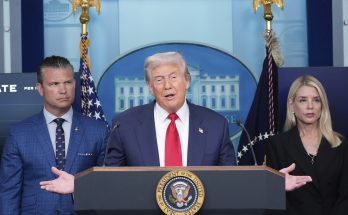
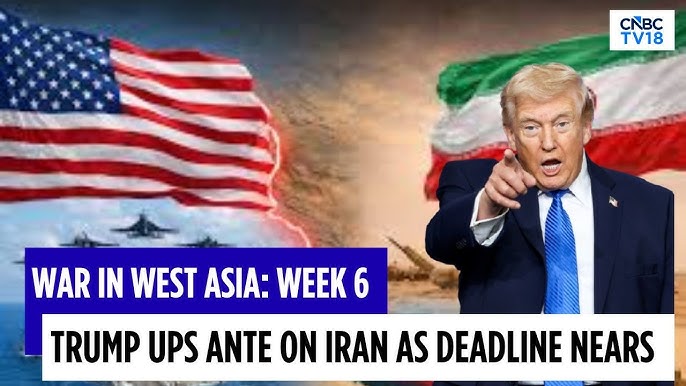
 Tensions in the Middle East have surged to a critical point as U.S. President Donald Trump issued one of his starkest warnings yet to Iran, threatening what he described as “complete demolition” if Tehran fails to comply with American demands before a rapidly approaching deadline.
The ultimatum—centered on reopening the strategically vital Strait of Hormuz—has placed the region on edge, with global leaders, markets, and humanitarian organizations bracing for potential large-scale conflict.
A Deadline With Global Consequences
At the heart of the crisis lies a firm deadline set by Washington: Iran must reopen the Strait of Hormuz or face sweeping military action. The narrow waterway is one of the world’s most critical النفط transit routes, responsible for a significant portion of global oil shipments.
President Trump warned that failure to comply could result in unprecedented strikes targeting Iran’s national infrastructure, including bridges, power plants, and transportation networks. He stated that such action could unfold within hours, emphasizing the scale and speed of the potential operation.
In remarks that have drawn widespread attention and criticism, Trump suggested that Iran could face destruction on a scale rarely seen in modern warfare, signaling a shift from targeted strikes to broader strategic attacks.
Escalating Military Activity
The warning comes amid already intensifying military operations. Recent U.S. airstrikes reportedly targeted key Iranian sites, including infrastructure linked to oil exports and military operations.
These actions follow a series of coordinated strikes involving U.S. and allied forces, aimed at weakening Iran’s strategic capabilities without fully disrupting its النفط production—at least for now.
Meanwhile, regional tensions have spilled beyond Iran’s borders. Reports indicate retaliatory actions by Iranian forces against regional targets, raising fears of a wider الحرب involving multiple countries across the Gulf.
إيران Responds Defiantly
Iranian officials have rejected the U.S. ultimatum, insisting they will not yield under pressure. Government representatives warned that any attack on civilian infrastructure would trigger severe retaliation.
In a dramatic response, Iranian authorities have called on civilians—particularly youth—to form protective human chains around critical facilities such as power plants. This move underscores both the الحكومة’s determination and the high stakes for civilian populations.
Tehran has also proposed ceasefire terms, but U.S. officials reportedly dismissed them as insufficient, further deepening the diplomatic deadlock.
Legal and Humanitarian Concerns
International organizations, including the United Nations, have expressed alarm over the rhetoric and potential targeting of civilian infrastructure. Experts warn that such actions could violate international law, particularly if essential services like electricity and water systems are deliberately destroyed.
Humanitarian groups fear catastrophic последствия for millions of civilians, especially in densely populated urban areas that rely heavily on centralized infrastructure.
Economic Shockwaves
The الأزمة has already begun to ripple through global markets. النفط prices have surged amid fears of disruption in the Strait of Hormuz, while investors brace for prolonged instability in the region.
Shipping routes remain uncertain, and energy-dependent economies are closely monitoring developments as the deadline approaches.
A Region on the Brink
As the الساعة ticks toward the deadline, uncertainty dominates the geopolitical landscape. While diplomatic channels remain technically open, both sides appear entrenched in their positions.
President Trump has indicated that while he prefers a negotiated outcome, the U.S. is fully prepared to act decisively if Iran does not comply.
Iran, for its part, continues to signal resistance, framing the ultimatum as an unacceptable violation of its sovereignty.
What Comes Next?
With hours—or at most days—remaining before the deadline expires, the world watches closely. The outcome could determine not only the future of U.S.-Iran relations but also the stability of the entire Middle East.
Whether the الأزمة ends in last-minute diplomacy or escalates into a broader conflict may hinge on decisions made in the immediate future—decisions with consequences that could reshape global politics for years to come.